
Serenity
سكينة
Sakina · Moon of Bethlehem · Bethlehem
الفيديو
المفهوم
السكينة هي جودة السلام المستقرة والمُقيمة — ليست سلام الغياب، بل سلام الحضور. ذُكرت السكينة في القرآن كالسلام الذي يُنزله الله في القلوب في أوقات المشقة.
Serenity (Sakina) is the settled, inhabited quality of peace — not the peace of absence, but the peace of presence. The Arabic root sakana means 'to dwell,' 'to settle,' 'to come to rest.' Sakina is mentioned in the Quran as the peace God sends down into hearts during hardship. Serenity is not achieved through effort; it arrives when effort stops.
النمط
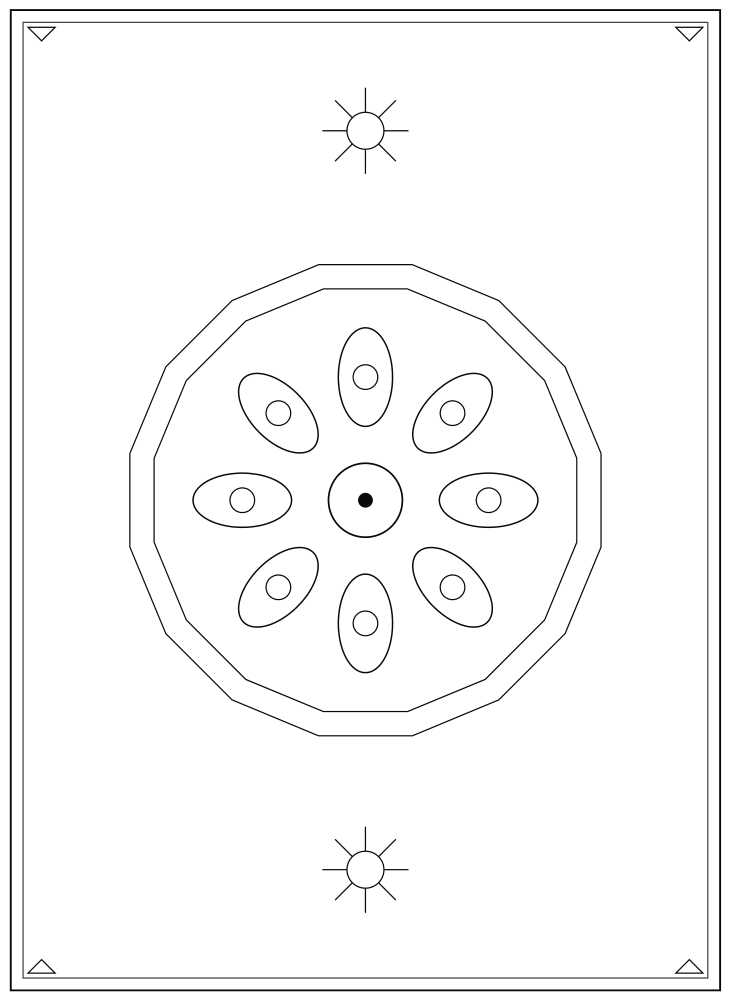
سُمِّي قمر بيت لحم بما يفعله بالعين: يجذبك للداخل نحو المركز الساكن، يمسك بك هناك، ثم يُطلقك برفق للخارج عبر حلقاته. هذه هي بنية السكينة — ليست صمت الفراغ، بل هدوء مركز مسكون بالكامل لدرجة أن لا شيء خارجه يستطيع إزعاجه.
The Moon of Bethlehem is named for what it does to the eye: it draws you inward to the still center, holds you there, then releases you gently outward through its rings. This is the architecture of Sakina — not the silence of emptiness, but the quiet of a center so fully inhabited that nothing outside can disturb it. The moon reflects; serenity reflects. Both catch what is already present and make it visible.
لوّن هذا النمط في الصفحة 6 من الكتاب.
كيفية التلوين
هذا القسم متاح باللغة الإنجليزية فقط.
Fill the center circle
The small circle at the absolute center — your deepest, most saturated color.
Work each petal
Fill petals in alternating colors — odd petals one color, even petals another.
Add the inner oval rings
The small inner oval within each petal — your third color or a lighter shade.
Work the outer 16-sided ring
The polygon boundary that contains all petals — use your darkest color.
Add the small accent circles
Any small pendant circles at the outer edge — they punctuate the composition.
لوحة ألوان مقترحة
#ff0000#c87941#f5f0e8#0a0a0a
الدلالة الثقافية
هذا القسم متاح باللغة الإنجليزية فقط.
The Moon of Bethlehem (Qamar Bayt Lahm) is perhaps the most internationally recognized Palestinian embroidery motif, reproduced on postage stamps, in museum catalogues, and in diaspora community work worldwide. It appears with equal frequency in Palestinian Tatreez from the 19th century through the present, making it one of the most stable patterns in the tradition — unchanged in structure across two centuries of political upheaval.
The orange and crimson palette of the Bethlehem Moon reflects the specific dyestuffs available in the Bethlehem region: pomegranate rind for the orange-red tones, imported cochineal for the deepest crimsons, local madder for the warm earth reds. These were not random color choices but the specific palette that Bethlehem's geography and trade connections made possible.
In Palestinian wedding tradition, the Moon motif was reserved for the most formal and most beautiful garments — the thobe worn by the bride on her wedding day and kept for the rest of her life. The Moon stitch required weeks of concentrated work; its completion was an act of love performed by the women of the family for the woman who would wear it.
تأمّل
هذا القسم متاح باللغة الإنجليزية فقط.
When do you feel most at peace — what conditions allow your own sakina to arrive?
اكتب إجابتك في الصفحة 8 من كتابك.