
Roots
جذور
Judhur · Jaffa Rose · Jaffa
The video
The concept
Roots (Judhur) are not what anchor you against the world — they are what make genuine height possible. The taproot goes as deep underground as the plant rises above ground. You cannot separate the height from the depth; they are the same phenomenon expressed in opposite directions.
الجذور ليست ما يربطك ضد العالم — بل هي ما يجعل الارتفاع الحقيقي ممكنًا. لا يمكن فصل الارتفاع عن العمق؛ إنهما ظاهرة واحدة تتجلى في اتجاهين متعاكسين.
The pattern
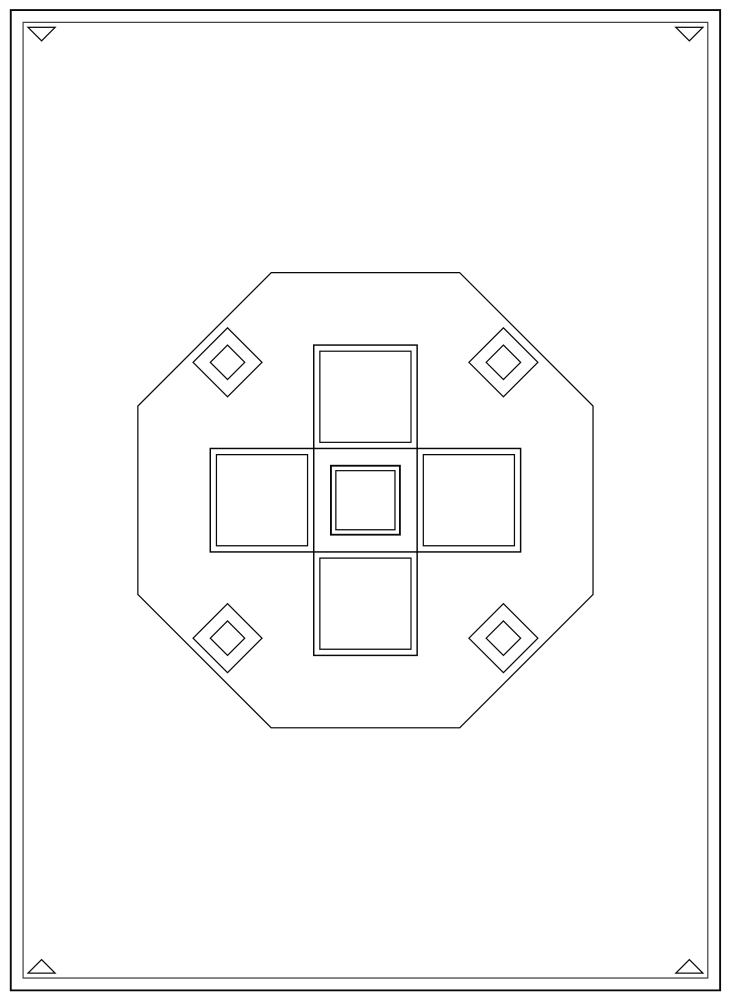
The Jaffa Rose opens in four equal directions from a single center — exactly the way Judhur work. Roots do not grow downward only; they expand in all directions simultaneously, finding purchase in every available direction of soil. The rose of Jaffa was planted at the entrance to Palestinian houses: the first thing seen when arriving, the last thing remembered when leaving. Roots and rose are both the mark of a life that has found its specific place.
وردة يافا تتفتح في أربعة اتجاهات متساوية من مركز واحد — بالضبط كما تعمل الجذور. الجذور لا تنمو للأسفل فحسب؛ بل تتوسع في جميع الاتجاهات في آنٍ واحد، تجد موطئ قدم في كل اتجاه متاح من التربة. وردة يافا كانت تُزرع عند مدخل البيوت الفلسطينية.
Color this pattern on page 10 of the book.
How to color it
Fill the center square
The 2×2 square at the absolute center — your primary color.
Work the four petal squares
Each large square extending in the four directions — same primary color or a close variant.
Add the inner petal details
The smaller square inside each large petal square — your accent color.
Fill the corner diamond forms
The diagonal decorations in each corner — contrasting color.
Complete the outer octagon ring
The light outer boundary ring — your most neutral tone.
Suggested palette
#ff7700#006400#f5f0e8#0a0a0a
Cultural significance
The Jaffa Rose (Wardat Yaffa) is documented from the coastal Palestinian tradition, where the cross-shaped motif of four squares around a center appears in thobes from Jaffa, Lydda, Ramla, and the surrounding coastal villages. Jaffa (Yaffa) is one of the oldest port cities in the world — its archaeological record extends back over four thousand years, and its position as the primary Mediterranean gateway to Palestine made it the most cosmopolitan Palestinian city.
The orange groves of Jaffa were cultivated by Palestinian families for generations and became one of the most recognized agricultural brands in international trade. The Jaffa orange was exported worldwide; its loss in 1948 represented not only economic catastrophe but the destruction of a way of life built around seasonal labor, family land, and connection to specific soil. The Jaffa Rose was embroidered in orange and green — the colors of the grove.
The Jaffa embroidery tradition was disrupted more severely than most Palestinian regional traditions by the events of 1948, when the city's Palestinian population was almost entirely expelled. The Jaffa Rose stitch has survived primarily through the diaspora communities — Palestinian women in Lebanon, Jordan, and Gaza who carried the coastal patterns with them and continued to practice and transmit them.
Reflection
What roots do you draw your strength from — what is the specific ground you grow from?
Write your answer on page 12 of your book.