Patience
صبر
Sabr · Lotus Flower · All Palestine
الفيديو
المفهوم
الصبر ليس تحملًا سلبيًا — بل جودة الاستمرار في التحرك عبر المقاومة. الجذر العربي صبر يعني الصبر والإصرار معًا. اللوتس يتفتح في الوحل.
Patience (Sabr) is not passive endurance — it is the quality of continuing to move through resistance with sustained presence. The Arabic root sabara means both to be patient and to be persistent. The lotus blooms in mud — it does not wait for clean water; it transforms what it is given into extraordinary beauty. This is Sabr.
النمط
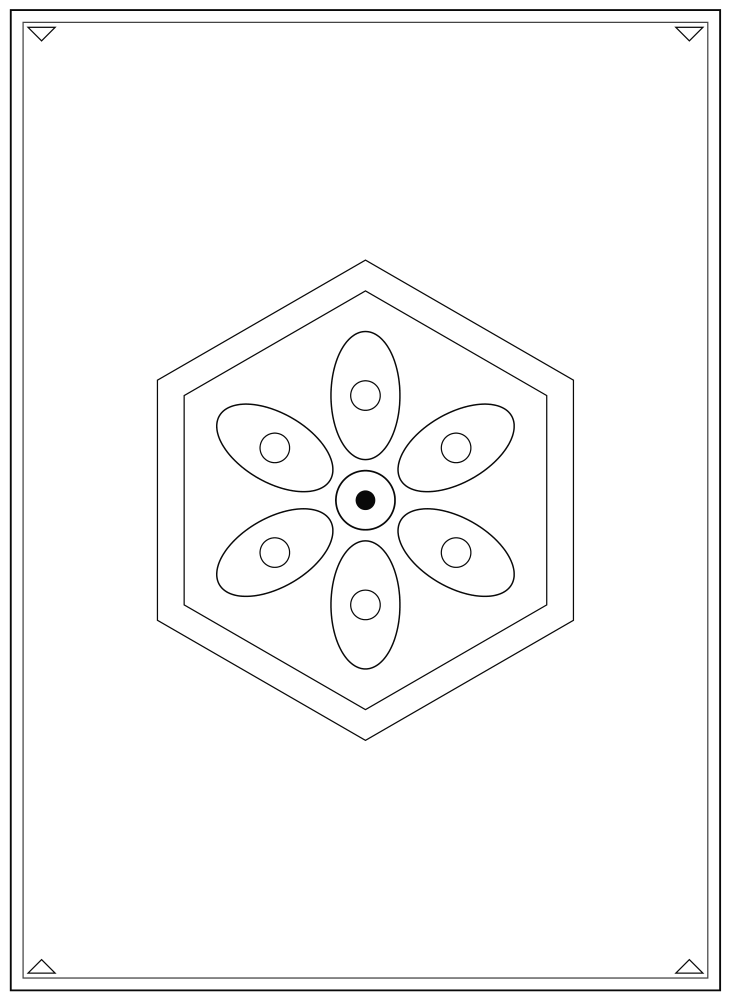
اللوتس يتفتح من دائرة مركزية واحدة — ست بتلات تنفتح للخارج في تناظر شعاعي مثالي. الصبر هو هذا التفتح: ليس الانتظار بل الانفتاح، ليس التحمل بل التكشف الذي يحدث بسبب التحمل.
The Lotus blooms from a single center circle — six petals opening outward in perfect radial symmetry. Sabr is this blooming: not the waiting but the opening, not the endurance but the unfolding that happens because of the endurance. The lotus does not bloom despite the mud; it blooms because of what the mud provides. Palestinian Tatreez chose this flower for patience because patience in the Palestinian tradition is not passive — it is the active capacity to transform what you are given into something extraordinary.
لوّن هذا النمط في الصفحة 42 من الكتاب.
كيفية التلوين
هذا القسم متاح باللغة الإنجليزية فقط.
Fill the center circle
The origin of the lotus — your most saturated color.
Work each petal from base to tip
Start where petal meets center and fill toward the outer tip — the color can fade slightly.
Alternate petal colors
Try two complementary colors in alternating petals for a richer effect.
Add the inner petal circles
The small circle within each petal — your accent color.
Complete the outer hexagon
The geometric boundary of the composition.
لوحة ألوان مقترحة
#ff69b4#006400#f5f0e8#0a0a0a
الدلالة الثقافية
هذا القسم متاح باللغة الإنجليزية فقط.
The Lotus Flower (Zahra al-Lotus) is documented across all Palestinian regions, making it one of the most widely shared motifs in the Tatreez tradition. Its six-petal radial structure connects Palestinian embroidery to an ancient Levantine floral tradition visible in mosaics, pottery, and architectural ornament dating back thousands of years to the Canaanite and Phoenician periods.
The lotus in Egyptian, Mesopotamian, and Levantine tradition represents the power of life emerging from apparently impossible conditions — the beautiful flower growing rooted in mud, its bloom rising into the air. This specific meaning made the lotus the ideal emblem of Sabr in Palestinian tradition: not the patience of passivity but the patience of active transformation.
The curved petals of the Lotus stitch are among the most technically demanding elements in Palestinian Tatreez. Creating a convincing curved form on the strict right-angle grid of cross-stitch requires careful manipulation of diagonal stitches — each curve is actually a series of small steps that, from a distance, read as a smooth arc. The embroiderer must hold the curved ideal in her mind while executing the angular reality, stitch by stitch.
تأمّل
هذا القسم متاح باللغة الإنجليزية فقط.
Where in your life are you being called to greater patience — what is asking you to stay present in difficulty?
اكتب إجابتك في الصفحة 44 من كتابك.