Prosperity
ازدهار
Izdihaar · Soap Bar of Nablus · Nablus
Le texte du livre est présenté en anglais et en arabe. Une traduction française intégrale est à venir.
La vidéo
Le concept
Prosperity (Izdihaar) is the condition of flourishing — of capacities fully expressed. The Arabic root zahara means to bloom, to flower, to shine. Nablus prosperity is one of the most documented economic realities in Ottoman-era Palestine: the soap factories, the textile trade, the position at trade route intersections made Nablus the commercial heart of the region.
الازدهار هو حالة التفتح — حياة في أوج ازدهارها وقدرات تُعبَّر عنها بالكامل. الجذر زهر يعني التفتح والإزهار.
Le motif
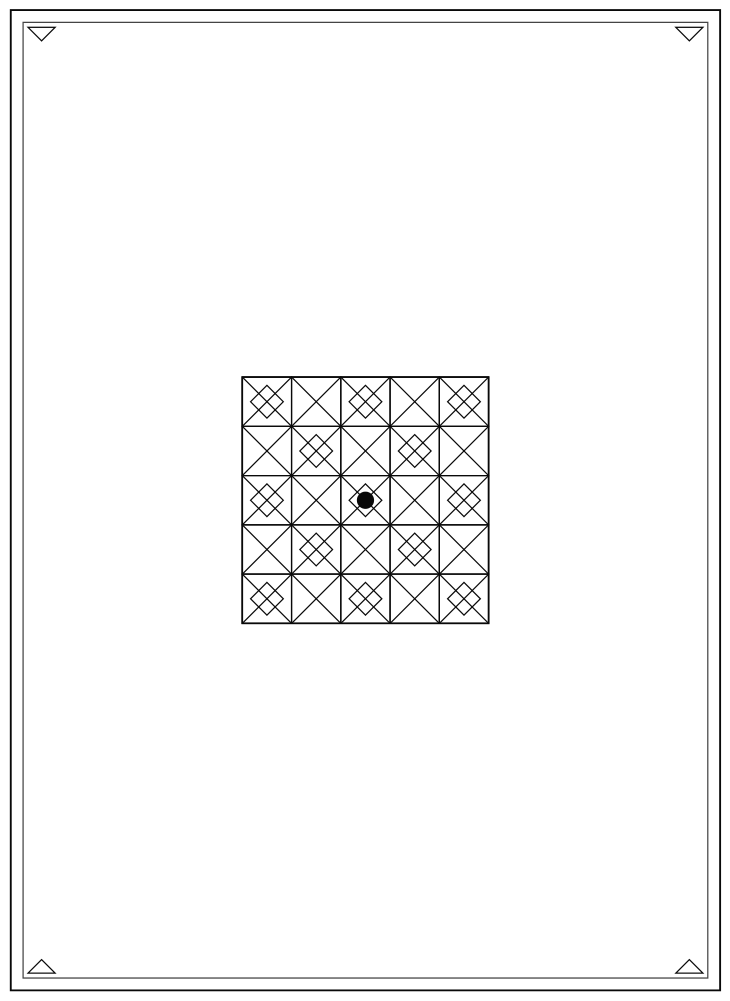
The Soap Bar of Nablus divides every square into four equal parts — the geometry of prosperity as fair distribution. Nablus soap has been pressed, cut, and distributed across the world for over a thousand years. Izdihaar in the Nablus tradition is not hoarding but sharing: the soap that is cut into equal pieces and sent to distant markets is the emblem of prosperity that multiplies by moving. Each bar carries the mark of the cut: the X that says 'this can be shared.'
فلقة صابون نابلس تقسم كل مربع إلى أربعة أجزاء متساوية — هندسة الازدهار كتوزيع عادل. صابون نابلس يُضغط ويُقطَّ ع ويُوزَّ ع في العالم منذ أكثر من ألف عام. الازدهار في تقليد نابلس ليس اكتنازًا بل مشاركة.
Coloriez ce motif à la page 62 du livre.
Comment le colorier
Start at one corner square
Work row by row across the full grid — do not jump between squares.
Fill alternating quadrants
Within each bar-square, fill two opposing quadrants in your primary color, leave two open.
Add the inner diamond
The small diamond at the center of each square — accent color.
Work the full grid systematically
All squares must be completed with the same logic — consistency is the point.
Complete the outer border
The frame that contains the soap grid — your deepest color.
Palette suggérée
#ffffff#8b1a1a#f5f0e8#0a0a0a
Signification culturelle
Nablus olive oil soap (Sabun al-Nablus) is one of the oldest continuously produced craft goods in the world — documented in trade records from over a thousand years ago, still produced in Nablus today using essentially the same process: olive oil, water, and lye, cooked in massive vats, poured into shallow pools, allowed to harden, then cut by hand into the characteristic rectangular bars.
Nablus (Nabulsi, ancient Shechem) is situated in the northern West Bank, at the center of one of the most agriculturally productive regions of historic Palestine. The city's soap factories (masabina) were among the most important commercial enterprises in Ottoman-era Palestine — Nablus soap was exported across the Ottoman Empire, to Egypt, Syria, Turkey, and European markets. The soap trade was the foundation of Nablus commercial identity.
The Nablus embroidery tradition is known for its geometric precision and its use of the soap bar as a documentary motif — encoding a specific industrial process into the ancient language of cross-stitch. This documentary impulse in Palestinian Tatreez — encoding the objects of Palestinian life into pattern — is the clearest evidence that embroidery was understood not as decoration but as cultural record.
Réflexion
What does flourishing look like in your own life — what would full bloom mean for you?
Écrivez votre réponse à la page 64 de votre livre.