
Strength
قوة
Quwwa · Four Hawk Heads · All Palestine
Le texte du livre est présenté en anglais et en arabe. Une traduction française intégrale est à venir.
La vidéo
Le concept
Strength (Quwwa) is not hardness — it is the capacity to exert sustained force without breaking. The hawk is the Palestinian emblem of strength that is both fierce and elegant, both powerful and precise. Four hawk heads facing outward: strength as 360-degree vigilance.
القوة ليست صلابة — بل القدرة على ممارسة قوة مستدامة دون كسر. الصقر هو رمز القوة الفلسطيني. أربعة رؤوس صقور تواجه للخارج: القوة كيقظة شاملة.
Le motif
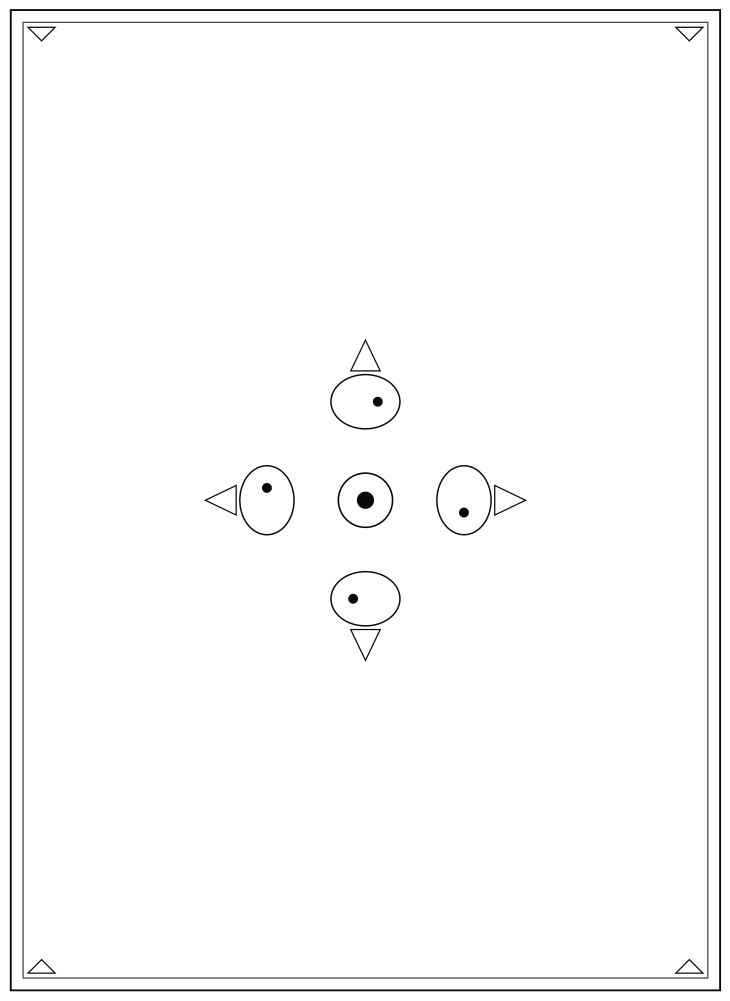
Four hawk heads face outward from the center — one for each direction of the horizon, together covering the full circle of alertness. Quwwa in Palestinian culture is not the strength of the fortress (closed, static) but the strength of the falcon (open, watchful, capable of moving in any direction instantly). The hawk that sees all four horizons simultaneously is more powerful than the wall that can only face one direction.
أربعة رؤوس صقور تواجه للخارج من المركز — واحد لكل اتجاه من اتجاهات الأفق، تغطي معًا الدائرة الكاملة من اليقظة. القوة في الثقافة الفلسطينية ليست قوة الحصن المغلق الساكن بل قوة الصقر المنفتح اليقظ.
Coloriez ce motif à la page 86 du livre.
Comment le colorier
Start with one hawk head
Fill the oval head form completely in your primary color.
Work the beak outward
The triangular beak pointing outward — a darker shade or contrasting color.
Add the eye dot
One small filled circle — precise, clear, in your deepest color.
Complete all four heads in sequence
Work clockwise, maintaining exact symmetry between all four.
Fill the center circle
The shared center that all four hawks radiate from — your most saturated color.
Palette suggérée
#daa520#000000#f5f0e8#0a0a0a
Signification culturelle
The Falcon (Shahin) holds a special place in Palestinian folk culture across all communities and all historical periods. Falconry was practiced by Bedouin hunters, by village farmers hunting rabbits and partridge, and by urban Palestinian families maintaining a tradition of aristocratic hunting that stretched back into the medieval period. The falcon was the most admired bird in Palestinian culture — admired for its speed, its precision, and its ability to master the open sky.
The Palestinian peregrine falcon (Falco peregrinus pelegrinoides) is still found in the rocky terrain of the West Bank hills and the Negev. Its distinctive appearance — golden-brown with black head markings — made it immediately recognizable and gave the hawk motif in Palestinian Tatreez its specific color palette: warm gold against deep black.
The Four Hawk Heads composition places the four faces of the falcon in the four cardinal directions — together covering the full 360 degrees of horizon. This is the visual encoding of a specifically Palestinian understanding of strength: not the strength of the fortified place (which can only face one direction) but the strength of the vigilant creature (which sees all directions simultaneously). Palestinian culture has always understood its survival as requiring this kind of omnidirectional awareness.
Réflexion
Where does your strength come from — what allows you to sustain force without breaking?
Écrivez votre réponse à la page 88 de votre livre.