
Eternity
خلود
Khulud · Tree of Life · All Palestine
書籍の本文は英語とアラビア語で掲載しています。全文の日本語訳は今後公開予定です。
動画
コンセプト
Eternity (Khulud) is not infinite duration — it is the quality of that which does not end because it continually renews itself. The Tree of Life is the oldest visual symbol in human art — appearing in Mesopotamian, Egyptian, Canaanite, and Levantine traditions for over five thousand years. Palestinian Tatreez inherits this entire lineage.
الخلود ليس استمرارًا لا نهاية له — بل جودة ما لا ينتهي لأنه يجدد نفسه. شجرة الحياة هي أقدم رمز بصري في الفن الإنساني.
模様について
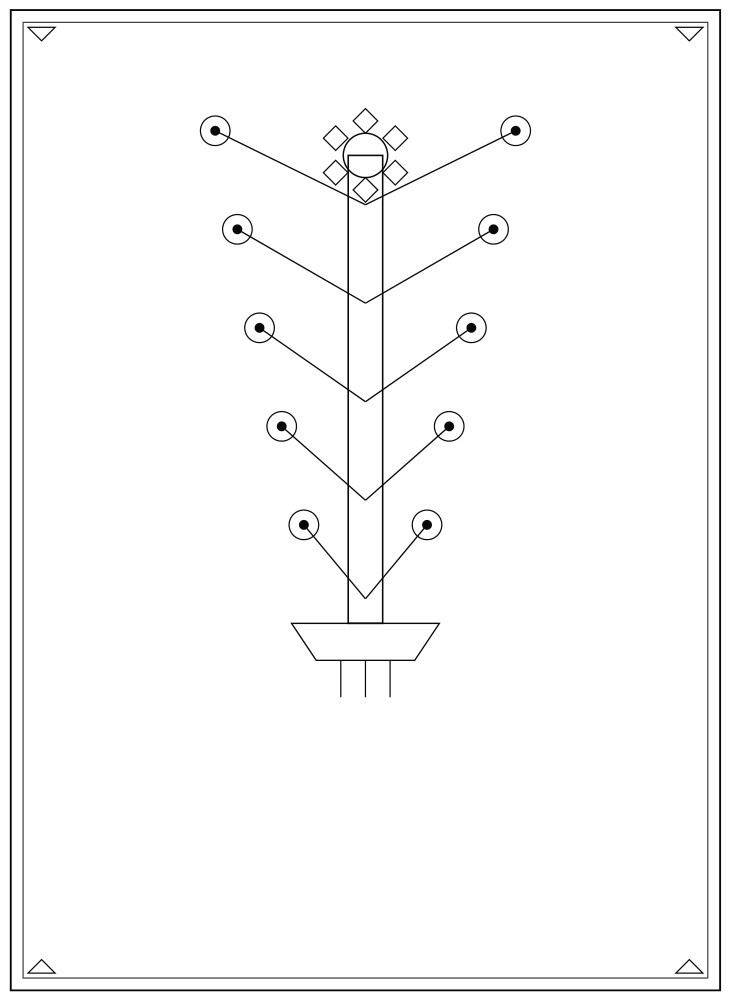
The Tree of Life rises on a single vertical trunk — then at five heights it sends symmetric branches left and right, each pair perfectly mirrored, each branch tip a flower. Khulud is this: not one generation but five, not one direction but two, not one flower but many — the tree that keeps extending because it keeps being tended. Palestinian olive trees a thousand years old are still producing fruit. Eternity is not the absence of ending; it is the presence of ongoing renewal.
شجرة الحياة ترتفع على جذع عمودي واحد — ثم على خمسة ارتفاعات ترسل أغصانًا متماثلة يسارًا ويمينًا. الخلود هو هذا: ليس جيلًا واحدًا بل خمسة، ليس اتجاهًا واحدًا بل اثنان. أشجار الزيتون الفلسطينية ذات الألف عام لا تزال تُنتج الثمار.
この模様は書籍の94ページで塗ることができます。
塗り方ガイド
Fill the trunk from base to top
Work upward through the trunk in your primary color — consistent, uninterrupted.
Work each branch pair level by level
Start at the lowest level, fill both branches before going higher.
Add the flower at each branch tip
Each small circle flower at the branch ends — your gold accent.
Fill the trunk diamond decorations
The small diamonds along the trunk — a slightly lighter shade.
Complete the base platform and roots
The base structure — your most grounding, deepest color.
おすすめの配色
#8b1a1a#006400#f5f0e8#0a0a0a
文化的な背景
The Tree of Life (Shajarat al-Hayah) is one of the most ancient motifs in human visual culture, appearing in Mesopotamian, Egyptian, Canaanite, and Levantine artistic traditions for over five thousand years. The motif depicts a central vertical axis — the cosmic tree — from which branches extend symmetrically, connecting the underworld (roots), the human world (trunk), and the divine world (canopy). Palestinian Tatreez inherits this entire symbolic tradition.
The specific trees of Palestine are encoded in the Tree of Life motif: the olive, with its broad canopy and twisted ancient trunk; the cypress, with its narrow vertical form and taproot as deep as its height; the almond, the first tree to bloom in Palestinian spring. Palestinian embroiderers working the Tree of Life were working with visual forms they had seen every day of their lives.
Some olive trees in Palestine are estimated to be over a thousand years old — living through the Crusader period, the Ottoman period, the British Mandate, the Nakba, and the occupation. Palestinian families who tend these ancient trees are in living relationship with a continuity measured in centuries. The embroidered Tree of Life carries this relationship into cloth: the pattern that endures as the tree endures.
振り返り
What in your life do you want to endure — what would you plant knowing you will not live to see it fully grown?
書籍の96ページに答えを書いてください。