
Creativity
إبداع
Ibdaa · Fire Center · All Palestine
الفيديو
المفهوم
الإبداع يأتي من الجذر بدع — الابتداء والإيجاد. الكانون كان مركز الحياة المنزلية الفلسطينية في الشتاء: حيث حُكيت القصص وطُرِّز عند ضوئه.
Creativity (Ibdaa) comes from the root bada'a — to originate, to bring into existence what did not exist before. The kanoun was the center of Palestinian domestic life in winter: the source of heat and light where stories were told and embroidery was done by firelight. Ibdaa begins at the fire.
النمط
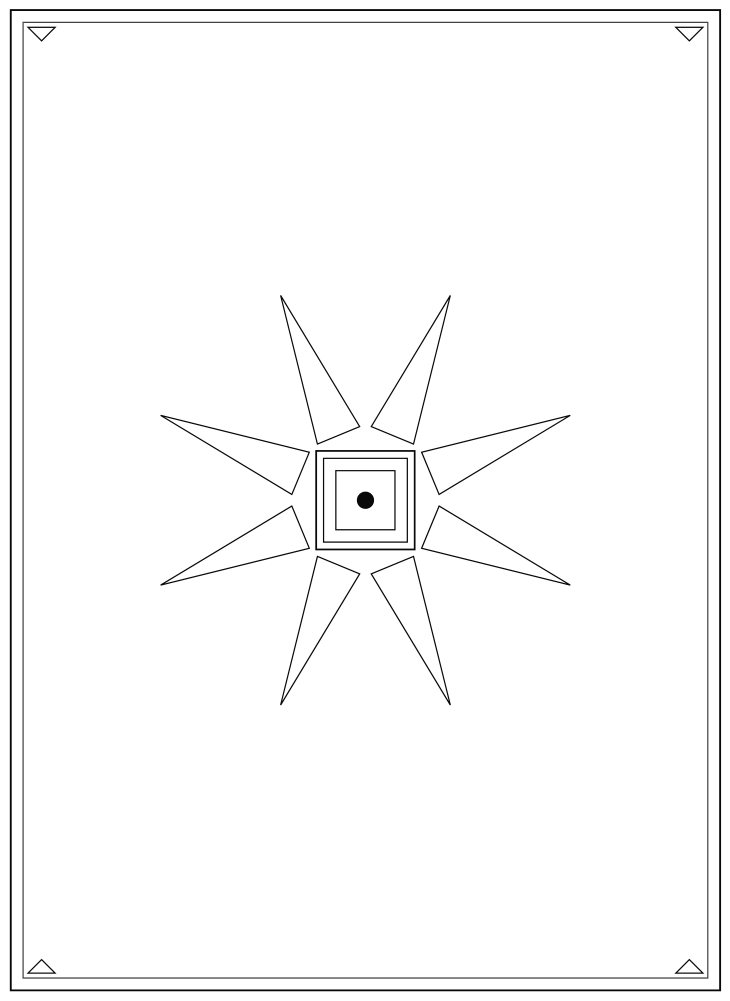
يضع كانون النار موقدًا مربعًا كبيرًا في المركز، ثم يرسل ثمانية ألسنة لهب مدببة في كل اتجاه. ومن الكانون المشترك تصبح ألسنة اللهب الثمانية ثمانية أفعال إبداع؛ فالإبداع الفلسطيني نادرًا ما يكون فرديًا، بل يشعّ من مركز مشترك ويدفئ كل ما يصل إليه.
The Fire Center (Kanoun al-Nar) places a large square hearth at the center, then sends eight pointed flames outward in every direction. From the shared hearth, eight flames become eight acts of making. Creativity in the Palestinian tradition is rarely solitary: it radiates from a shared center, warming everything it reaches.
لوّن هذا النمط في الصفحة 110 من الكتاب.
كيفية التلوين
هذا القسم متاح باللغة الإنجليزية فقط.
Fill the center square hearth
The large central square — your primary red, the fire's heart.
Work the inner square
The smaller square within — a slightly lighter version.
Fill each of the 8 flame points
Each pointed triangle extending outward — work clockwise, same color as center.
Add the inner square accent
Any decorative element within the center square — your gold accent.
Complete the outer boundary
The final containing form.
لوحة ألوان مقترحة
#ff0000#ff8800#f5f0e8#0a0a0a
الدلالة الثقافية
هذا القسم متاح باللغة الإنجليزية فقط.
The Kanoun (fire brazier) was one of the most essential objects in Palestinian domestic life in the pre-industrial period. Made of clay or metal, the kanoun held burning charcoal for cooking and heating. In winter, Palestinian families gathered around the kanoun in the center of the room — it was the source of warmth, the center of domestic life, the place where food was cooked, stories were told, and the work of the household was done.
Palestinian women sat around the kanoun to do their embroidery — working by the light and warmth of the fire during the winter months when agricultural work was limited. The kanoun was thus the physical center of the embroidery tradition itself: the gathering place, the light source, the source of the warmth that made the concentrated fine work possible. Palestinian women encoded this object into Tatreez because it was the object around which their creative lives organized.
The fire imagery of the Kanoun al-Nar motif — the central square hearth surrounded by eight pointed flames — creates a visual representation of creativity as radiance: the fire at the center sends its light outward in all directions, illuminating the work that is done in its presence. This is the most specific and most intimate of all the Palestinian Tatreez motifs: it encodes not a landscape or an animal or a plant but a domestic object, a winter evening, a gathering of women at work.
تأمّل
هذا القسم متاح باللغة الإنجليزية فقط.
What new thing are you bringing into the world — what are you making that did not exist before you made it?
اكتب إجابتك في الصفحة 112 من كتابك.