Harmony
انسجام
Insijam · Hannoun Center · Gaza & Be'er Sheva
書籍の本文は英語とアラビア語で掲載しています。全文の日本語訳は今後公開予定です。
動画
コンセプト
Harmony (Insijam) is the quality of multiple elements coexisting without canceling each other. The hannoun (wildflower anemone) grows across Palestine every spring without asking permission — in fields, roadsides, ruins, and olive groves simultaneously. Harmony does not require planning; it requires only that each thing be fully itself.
الانسجام هو جودة تعايش عناصر متعددة دون إلغاء بعضها. الحنون ينمو في كل مكان في فلسطين كل ربيع دون استئذان. الانسجام لا يتطلب تخطيطًا.
模様について
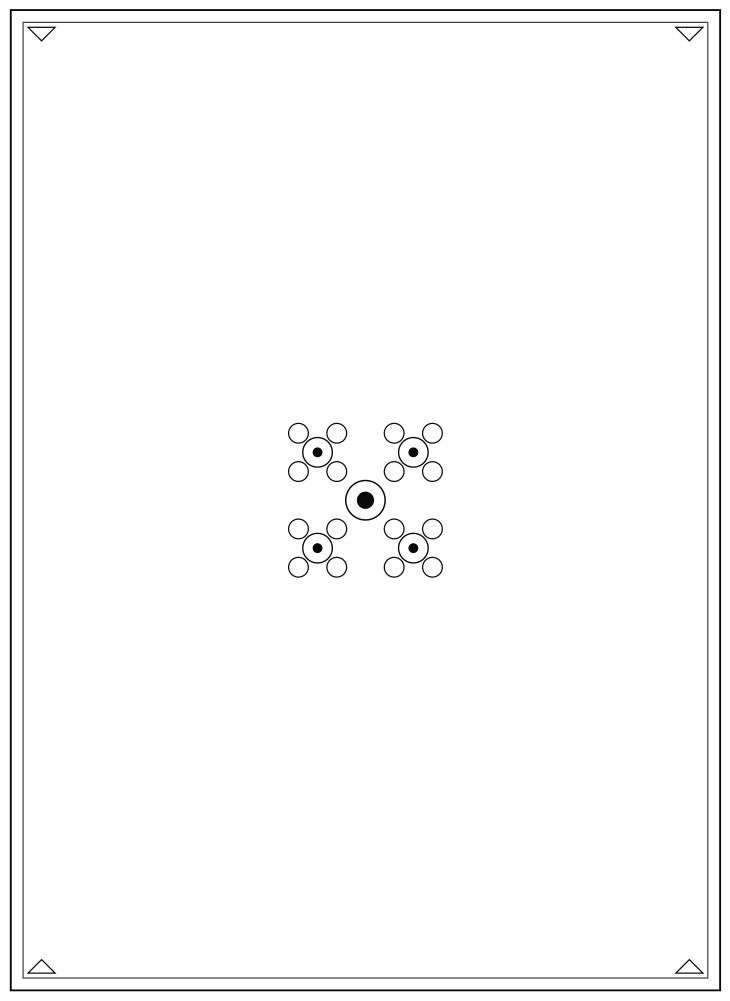
Four wildflower units meet at a single center point, each touching the others only there — neither merging nor separating. Insijam is this: four distinct things sharing one point of contact, each keeping its own petals, its own color, its own shape. Four wildflowers meet at one point without losing their separate forms.
أربع وحدات من الزهر البري تلتقي في نقطة مركزية واحدة، تلمس كل زهرة الأخريات هناك فقط — لا تندمج ولا تنفصل. هذا هو الانسجام: أربعة أشياء مختلفة تتشارك نقطة تماس واحدة، وتحتفظ كل منها ببتلاتها ولونها وشكلها، دون أن تفقد أي زهرة شكلها المستقل.
この模様は書籍の126ページで塗ることができます。
塗り方ガイド
Start at the center point
The single point where all four flowers touch — one filled dot.
Work each flower unit from its center
Fill each small central circle of each flower first.
Add each flower's four petals
The four small petal circles around each flower center — use a lighter shade.
Work all four flower units clockwise
Complete one full flower before moving to the next.
Complete the outer boundary ring
The containing circle that frames the full composition.
おすすめの配色
#ff0000#000000#f5f0e8#0a0a0a
文化的な背景
The Hannoun (anemone) is one of the most loved wildflowers in Palestinian culture — its brilliant red carpeting the Palestinian hillsides in early spring, its appearance marking the end of winter and the beginning of the agricultural year. The hannoun was gathered by children, given as gifts, placed in houses for color and scent, and celebrated in Palestinian folk poetry as the emblem of the land in bloom.
The poet Mahmoud Darwish — Palestine's most celebrated literary voice — returned to the hannoun repeatedly in his work as a symbol of the specific Palestinian landscape: 'On this earth, there is what makes life worth living... the September anemone.' The embroidered hannoun center carries this literary tradition into cloth: the flower that grows without permission, that returns every spring regardless of what has happened, that is irreducibly Palestinian.
Hannoun in Arabic is also a term of endearment — ya hannounti means 'my tender one,' 'my gentle one.' The wildflower that names a center of harmony is also the word for the tenderness between people who care for each other. Palestinian Tatreez is full of these double meanings: the botanical and the relational encoded in the same word, the landscape and the community held together in the same pattern.
振り返り
Where in your life do you experience genuine harmony — what conditions allow different things to coexist beautifully?
書籍の128ページに答えを書いてください。