
Continuity
استمرارية
Istimrariyya · Center Chain · All Palestine
The video
The concept
Continuity (Istimrariyya) is the quality of persisting through time — not unchanged, but connected. A chain has continuity: it can bend, change direction, carry different weights — but the links remain connected. Palestinian cultural continuity has survived conditions that would have destroyed less rooted cultures.
الاستمرارية هي جودة الاستمرار عبر الزمن — لا دون تغيير، بل بترابط. السلسلة يمكنها الانحناء وتغيير الاتجاه — للكن الحلقات تبقى متصلة.
The pattern
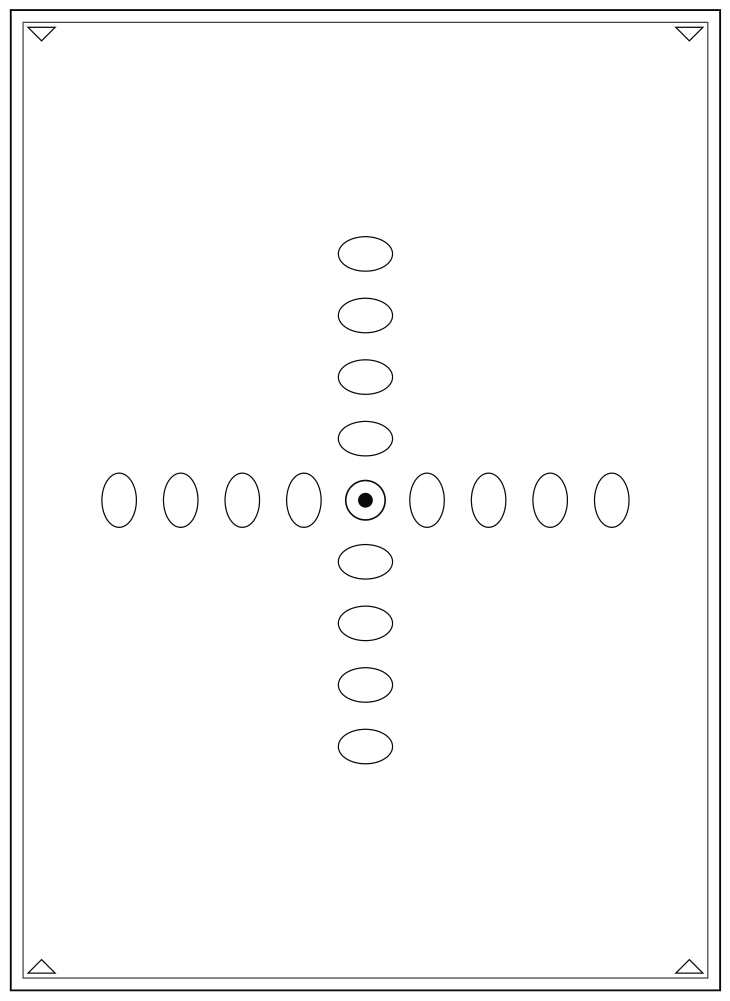
Four interlocking chains extend from the center in four directions — each chain of four linked ovals representing a generation of connection. Istimrariyya is structural: you cannot remove one link without breaking the chain. The chain can bend, change direction, carry different weights at different times — but the links remain connected. Palestinian cultural continuity has survived conditions that would have destroyed less rooted cultures. The chain holds because each link holds the next.
أربع سلاسل متشابكة تمتد من المركز في أربعة اتجاهات — كل سلسلة من أربعة بيضاويات مترابطة تمثل جيلًا من الاتصال. الاستمرارية بنيوية: لا يمكنك إزالة حلقة واحدة دون كسر السلسلة.
Color this pattern on page 134 of the book.
How to color it
Start at the center circle
Fill the central hub circle — your primary color.
Work each chain arm from center outward
Fill each interlocking oval of one arm before moving to the next arm.
Maintain the interlocking rhythm
Each oval overlaps slightly with the next — the overlap is key.
Work all four arms in sequence
Complete one full arm before starting the next.
Complete the outer oval tips
The final ovals at the end of each arm — your accent color.
Suggested palette
#8b1a1a#000000#f5f0e8#0a0a0a
Cultural significance
The Center Chain (Silsilat al-Markaz) encodes continuity as a structural property — the chain that can only be broken by the failure of an individual link, that maintains its integrity through the integrity of each connection. Palestinian cultural continuity has survived conditions — displacement, occupation, dispersal, blockade — that would have destroyed less deeply rooted traditions. The chain holds because each link holds.
The chain form in Palestinian ornamental tradition appears in jewelry, in architectural decoration, and in Tatreez — always as an emblem of the connected, the sustained, the unbroken. Palestinian families have maintained connections across vast geographic separations: cousins who have never met sharing the same family names, the same stories of the same villages, the same patterns of the same embroidery tradition.
Contemporary Palestinian embroiderers in the diaspora — in Lebanon, Jordan, Europe, the Americas — practice Tatreez as a form of the continuity they embody. The stitch patterns they learn from their mothers and grandmothers are the links of the chain; the teaching of the patterns to their children is the forging of the next link. Istimrariyya is not the passive survival of the past; it is the active transmission of what must not be lost.
Reflection
What continuity are you part of — what have you received, and what will you pass on?
Write your answer on page 136 of your book.