
Giving
عطاء
Ataa · The Necklace · Gaza
الفيديو
المفهوم
العطاء هو اللكرم المُعبَّر عنه في الفعل. الجذر عطا يعني ببساطة منح — لا مؤهل ولا شرط. الضيافة الفلسطينية هي العطاء المنظّم.
Giving (Ataa) is generosity expressed in action — extending what one has toward another who needs it. The Arabic root ata means simply 'to give' — no qualifier, no condition, no expectation of return. Palestinian hospitality is structured giving: not the emergency provision but the ritual offering.
النمط
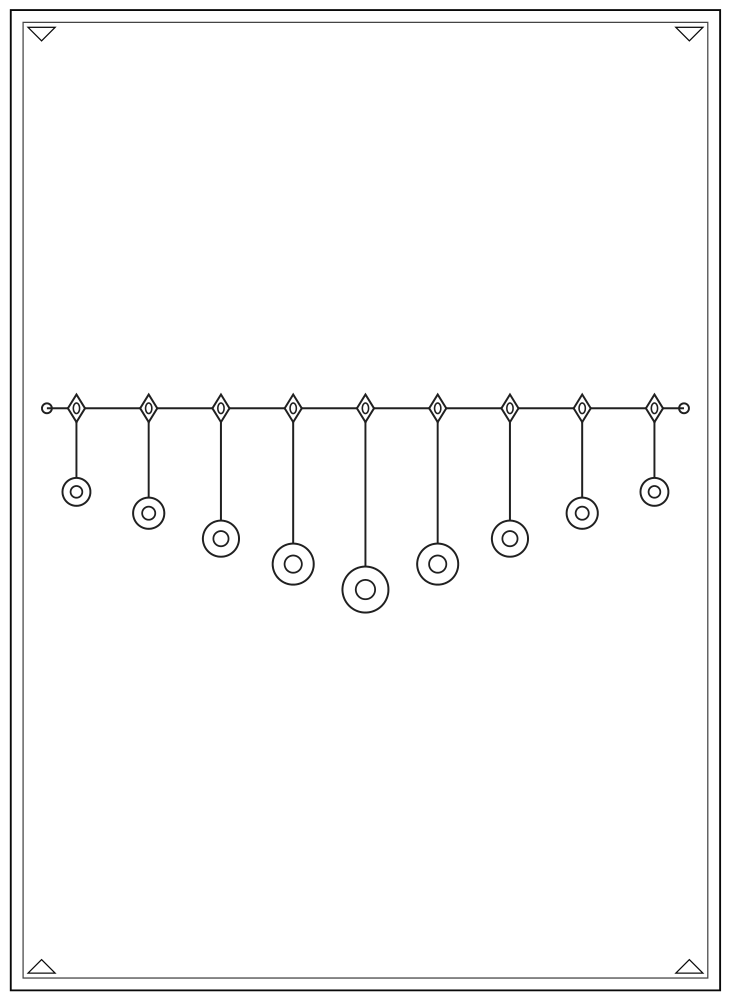
القلادة تسير بخيط أفقي عبر العرض الكامل للصفحة — ثم تُسقط دلّايات دائرية بفواصل متساوية، كل منها هدية. العطاء هو هذا: الخيط يصمد، العطاء يستمر، لا توجد نقطة نهاية للقلادة.
The Necklace runs a horizontal thread across the full width of the page — then drops pendant circles at equal intervals, each one a gift, each one hanging from the same thread. Ataa is this: the thread holds, the giving continues, there is no end point to the necklace, it runs the full width. Palestinian hospitality is structured giving — not the emergency provision but the ritual offering, the coffee given before it is asked for, the seat of honor given to the guest who has traveled far.
لوّن هذا النمط في الصفحة 142 من الكتاب.
كيفية التلوين
هذا القسم متاح باللغة الإنجليزية فقط.
Start at one end of the horizontal thread
Fill the thread line from left to right — your primary gold.
Work each pendant from top down
Fill each vertical connection line, then the pendant circle below it.
Add the inner dot to each pendant
The filled center of each circle — your deepest accent.
Add the thread diamonds
The small diamond where each pendant meets the thread — use the same accent color as the inner dots, so clasp and center read together.
Complete the full thread line
Ensure the horizontal thread is consistent from edge to edge.
لوحة ألوان مقترحة
#ffd700#c0c0c0#f5f0e8#0a0a0a
الدلالة الثقافية
هذا القسم متاح باللغة الإنجليزية فقط.
The Necklace (al-Qilada) as an object of Palestinian material culture represented the primary form of portable wealth for Palestinian women. Gold and silver necklaces were the main financial reserve of Palestinian families — convertible to cash in times of necessity, given to daughters at marriage as the foundation of their economic independence, passed from generation to generation as the most durable form of family inheritance.
Palestinian jewelry-making was a skilled trade practiced in the larger cities — particularly in Jerusalem, Gaza, Hebron, and Nablus — where specialized craftsmen (often from Jewish communities) worked gold and silver into the necklaces, pendants, and head ornaments that were essential elements of formal Palestinian women's dress. The embroidered necklace in Tatreez is a reference to this parallel craft tradition.
Gaza's coastal trade position made it the primary entry point for Mediterranean jewelry goods — Venetian glass beads, Egyptian gold ornaments, and Syrian metalwork all passed through Gaza's market. The Necklace motif in Gaza Tatreez reflects this commercial geography: Gaza women embroidered the objects that Gaza's trade brought to their city, translating the goods of the market into the language of the household.
تأمّل
هذا القسم متاح باللغة الإنجليزية فقط.
What do you have to give that you have not yet given — what generosity is waiting in you?
اكتب إجابتك في الصفحة 144 من كتابك.