Identity
هوية
Huwiyya · Central Map · All Palestine
الفيديو
المفهوم
الهوية هي إجابة من أنت؟ — ليست الإجابة عن السيرة الذاتية، بل الإجابة الجوهرية. الهوية الفلسطينية محلية وإقليمية ووطنية ودينية وشتاتية في آنٍ واحد.
Identity (Huwiyya) is the answer to 'Who are you?' — not the biographical answer, but the essential one. Palestinian identity is simultaneously local, regional, national, religious, and diasporic. The Central Map holds all of these in relation to each other around a single center.
النمط
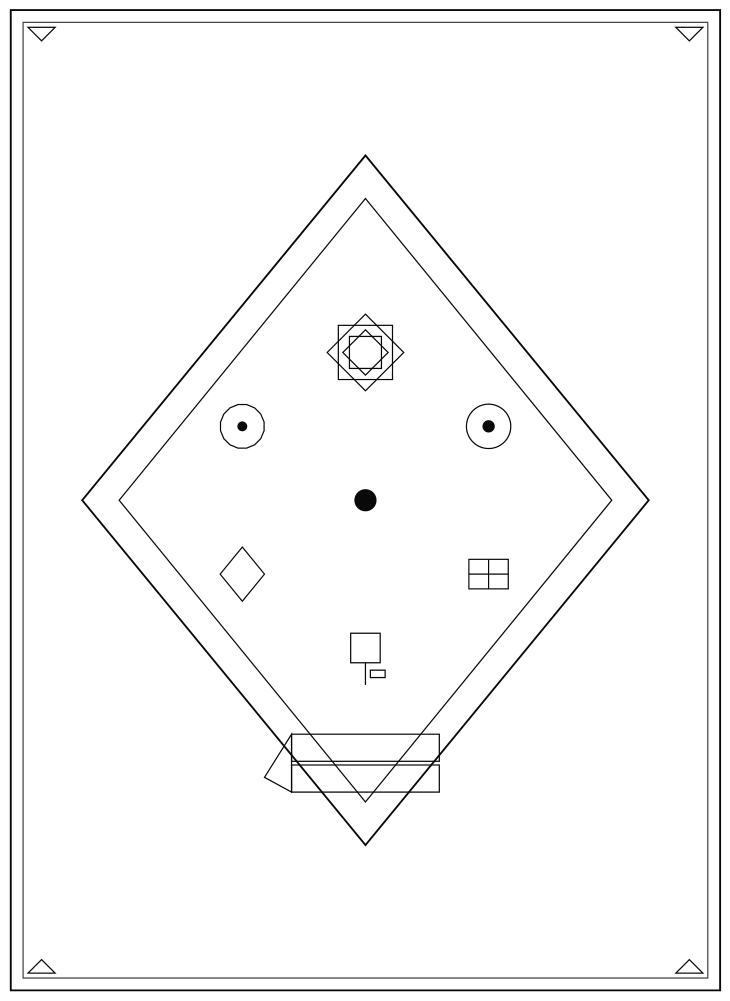
الخريطة المركزية تحتضن إطارًا معينيًا كبيرًا يحتوي رموز المدن الفلسطينية مرتبة حول نقطة مركزية واحدة. الهوية ليست مدينة واحدة — بل الخريطة التي تحتضنهم جميعًا في علاقتهم ببعض.
The Central Map holds a large diamond frame containing the symbols of Palestinian cities arranged around a single center point: a star for Jerusalem, a circle for Jaffa's orange, soap bars for Nablus, a key for the homeland, a diamond for Hebron, a moon for Bethlehem. Huwiyya is not one city — it is the map that holds all of them in relation to each other, the center that makes the multiplicity of Palestinian identity into a coherent whole. To close with the map is to close with all of Palestine.
لوّن هذا النمط في الصفحة 158 من الكتاب.
كيفية التلوين
هذا القسم متاح باللغة الإنجليزية فقط.
Fill the outer diamond frame
The large boundary diamond — your primary color.
Work each city symbol individually
Take one symbol at a time — star, circle, soap bars, key, diamond, moon.
Fill each symbol in its traditional color
Star: gold. Orange: orange. Soap: white. Key: red. Hebron diamond: burgundy. Moon: red-orange.
Add the center anchor dot
The single center point — your deepest, most intentional color.
Complete the flag color accent
The three bands at the base — black, white, green with red triangle.
لوحة ألوان مقترحة
#000000#ff0000#f5f0e8#0a0a0a
الدلالة الثقافية
هذا القسم متاح باللغة الإنجليزية فقط.
Palestinian identity (Huwiyya al-Filistiniyya) is one of the most complexly constituted national identities in the contemporary world — simultaneously rooted in specific local places (village, city, neighborhood), regional geographic units (West Bank, Gaza, 1948 territories), national political aspiration, religious communities (Muslim, Christian, secular), and diaspora experience across multiple countries and generations.
The Central Map motif (al-Kharita al-Markaziyya) was developed by Palestinian embroiderers in the diaspora as a form of cartographic memory — a way of encoding the specific places of Palestine into the geometric language of cross-stitch. The map is made of symbols, not outlines: a star for Jerusalem's holiness, a circle for Jaffa's orange groves, soap bars for Nablus industry, a key for the right of return, a diamond for Hebron's vineyards, a moon for Bethlehem's shepherds.
To close this book with Identity is to close with the full geography of Palestine — not one city, not one motif, not one concept, but the entire map of what Palestinian culture has built, maintained, and transmitted across over a century of dispossession. Huwiyya is not what cannot be taken; it is what is continuously chosen, continuously practiced, and continuously passed from one generation to the next through the movements of the needle and the thread.
تأمّل
هذا القسم متاح باللغة الإنجليزية فقط.
How do you describe your own identity — what makes you irreducibly, specifically yourself?
اكتب إجابتك في الصفحة 160 من كتابك.